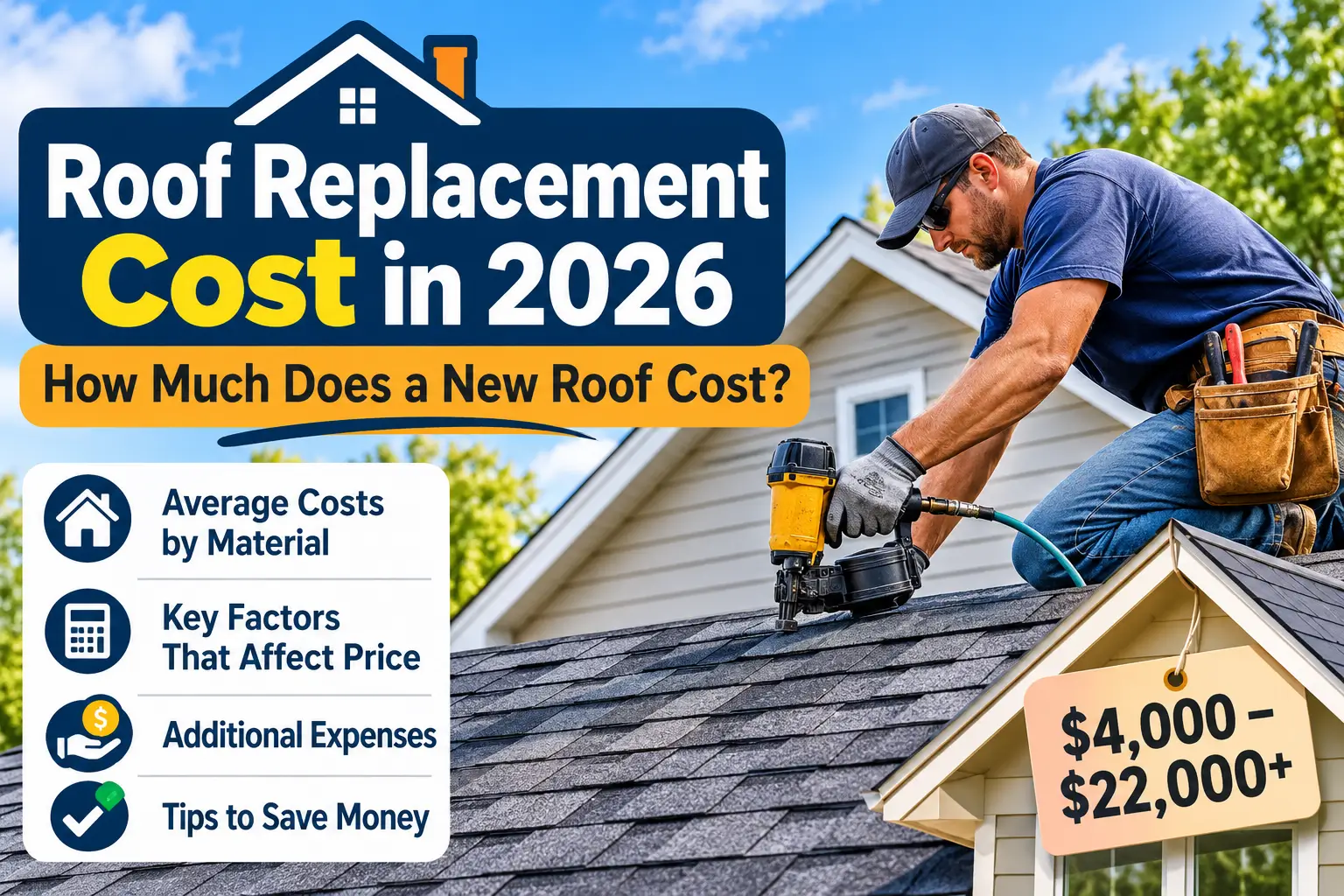
Roof Replacement Cost in 2026: How Much Does a New Roof Cost?
Replacing a roof is one of the biggest home improvement expenses. The final price depends on your roof’s size, material, shape, and condition. Labor rates and local building requirements also affect the total.
So, how much does a new roof cost in 2026? Many homeowners should prepare for a five-figure project. However, a small, simple roof may cost less than a large or complicated one.
This guide explains roof replacement costs across the United States. You will learn how contractors calculate prices, which materials cost more, and what extra expenses to expect. You will also find practical tips for comparing estimates and avoiding unexpected charges.
How Much Does Roof Replacement Cost in 2026?
Roof replacement costs vary widely across the United States. Published estimates use different project samples, materials, and calculation methods. That is why you may see different national averages online.
For example, one 2026 industry estimate places the average replacement cost near $9,610. Another industry source reports a $17,631 average based on its 2025 U.S. roofing report. These figures are not directly interchangeable.
For early budgeting, many homeowners can use these broad planning ranges:
- Small or simple asphalt-shingle projects may cost several thousand dollars.
- Many standard residential replacements reach the low or middle five figures.
- Large roofs, premium materials, steep slopes, and major repairs can push costs much higher.
Treat online figures as starting points, not guaranteed contractor prices. Your roof’s actual measurements and project details matter more than your home’s advertised square footage.
Average Roof Replacement Cost by Roofing Material
Your roofing material has a major effect on the total project cost. Asphalt shingles usually have a lower upfront price. Tile, slate, and some metal systems often require a larger investment.
The following figures are broad installed-cost planning ranges. Actual estimates vary by product, location, roof design, and labor.
| Roofing material | Approximate installed cost per sq. ft. |
|---|---|
| Asphalt shingles | $3–$6 |
| Metal roofing | $5–$16 |
| Tile roofing | $7–$25 |
| Wood shakes | $7–$15 |
| Slate roofing | $10–$30 |
These ranges are not fixed national prices. Premium products and complex installations can exceed them.
Asphalt Shingles
Asphalt shingles remain a popular choice for American homes. They offer a familiar appearance and a relatively affordable installation cost.
Homeowners can choose between basic three-tab shingles and architectural shingles. Architectural shingles usually have a thicker, more dimensional appearance. They may also offer better wind resistance, depending on the product.
Consider asphalt shingles if you want a widely available roofing option. Ask contractors to identify the exact shingle brand, product line, and warranty.
Metal Roofing
Metal roofing costs more upfront than many asphalt systems. However, it can offer a long service life when installed and maintained correctly.
Common options include exposed-fastener panels and standing-seam roofing. Standing-seam systems generally cost more because of their materials and installation requirements.
Metal roofing may suit homeowners who want durability and a different appearance. Check the product specifications, fastener details, finish warranty, and local installation requirements.
Tile Roofing
Concrete and clay tiles create a distinctive appearance. They are common in some warmer regions of the United States.
Tile systems can be expensive to install. Their weight may also require an assessment of the home’s existing structure. Replacing individual tiles is different from replacing the complete roofing system.
Before choosing tile, confirm that your roof structure can support the selected product.
Wood Shake Roofing
Wood shakes provide a natural, textured appearance. They usually require more maintenance than many conventional asphalt systems.
Their price depends on wood type, product quality, and installation details. Local fire codes and insurance requirements may also affect whether wood roofing is suitable.
Slate Roofing
Natural slate is a premium roofing material. It can last for many decades when the roof structure and installation are suitable.
However, slate is heavy and requires specialized installation. Material costs and skilled labor can make it one of the most expensive roofing choices.
Ask whether your home can support the weight before selecting natural slate.
What Is a Roofing Square?
Roofing contractors often measure materials and labor in squares instead of ordinary square feet.
One roofing square covers 100 square feet of roof surface.
For example:
- 1,000 square feet equals 10 roofing squares.
- 1,500 square feet equals 15 roofing squares.
- 2,000 square feet equals 20 roofing squares.
- 2,500 square feet equals 25 roofing squares.
These examples describe roof surface area, not the home’s interior living area.
A house with 2,000 square feet of living space does not automatically have a 2,000-square-foot roof. Roof pitch, overhangs, and design can increase the actual surface area.
Contractors also account for cutting waste and material overlaps. Ask for the measured roof area and the number of squares in your estimate.
What Factors Affect Roof Replacement Cost?
Two homes with similar floor plans can receive very different roofing estimates. Several details influence the final price.
1. Roof Size
Larger roofs need more shingles, panels, underlayment, flashing, and labor. This usually makes roof size one of the biggest cost factors.
Ask the contractor to provide the measured roof area. Do not rely only on the home’s interior square footage.
2. Roof Pitch and Slope
Roof pitch describes how steep a roof is. A steep roof can require additional safety equipment and more installation time.
Workers may also need special access equipment. These requirements can increase labor costs.
3. Roof Shape and Complexity
A simple roof usually takes less time to cover than a complicated design.
Features that can increase labor include:
- Multiple roof valleys
- Dormers and skylights
- Chimneys
- Several roof sections
- Unusual angles
- Difficult access points
Each feature may require additional cutting, flashing, and waterproofing work.
4. Existing Roof Removal
Some projects require contractors to remove the old roofing before installing new materials.
This process is called tear-off. It involves labor, disposal, and sometimes dumpster rental.
The number of existing roofing layers can affect removal costs. Local rules may also limit how many layers a contractor can install over an existing roof.
Ask whether your estimate includes complete removal and disposal.
5. Roof Decking Repairs
Roof decking is the wood surface beneath the roofing materials. It provides the base for the underlayment and shingles.
Leaks and long-term moisture exposure can damage this surface. Contractors may discover soft, cracked, or rotted decking during tear-off.
Replacing damaged sections adds labor and material costs. Ask how the contractor will document and price any unexpected repairs.
6. Roofing Material Quality
Different products have different prices and installation requirements.
Even within the asphalt category, basic and premium shingles can have very different costs. Metal panels also vary by metal type, thickness, coating, and panel design.
Compare exact product specifications instead of choosing by material name alone.
7. Location and Labor Rates
Roofing prices vary between states, cities, and local markets. Labor availability, transportation, permits, and building requirements all influence estimates.
For example, a project in Florida may involve different wind-related product requirements than a project in another region.
Always check local requirements before choosing a roofing system.
Additional Costs to Include in Your Roofing Budget
The price of the main roofing material does not always represent the complete project cost. Several supporting items may appear in the contractor’s proposal.
Underlayment and Ice-and-Water Protection
Underlayment sits beneath the primary roofing material. It provides another layer of protection against moisture.
Some roof areas may need additional protection, depending on local climate and code requirements. Ask which underlayment products the contractor plans to install.
Flashing and Drip Edge
Flashing helps direct water away from vulnerable roof joints. Contractors use it around chimneys, walls, valleys, and other roof openings.
Drip edge helps guide water away from roof edges. These components are important parts of a complete roofing system.
Ventilation
A roof ventilation system helps manage heat and moisture in the attic.
Depending on the home’s design, a project may require ridge vents, soffit vents, or other ventilation components. Ask whether the contractor will inspect the existing ventilation system.
Gutters and Downspouts
A roof replacement does not always include gutter replacement.
However, damaged or poorly positioned gutters may need attention. Ask whether gutter work is part of the estimate or a separate service.
Permits and Inspections
Permit requirements depend on the local building department and project scope.
Some areas require permits for roof replacement. Others may have specific inspection or product requirements.
Ask your contractor which permits apply and whether the quoted price includes permit fees.
Cleanup and Disposal
A professional roofing project creates debris. Old shingles, nails, packaging, and damaged materials must be collected and removed.
Confirm that the estimate includes cleanup, hauling, and disposal. Ask whether the contractor uses a dumpster or another disposal method.
Roof Replacement Cost by Roof Size
Roof size helps you build an initial budget. However, the following examples are illustrative calculations, not contractor quotes.
For a basic planning exercise, assume an installed price of $4 to $11 per square foot. This broad range does not fit every material or location.
| Roof surface area | Illustrative cost range |
|---|---|
| 1,000 sq. ft. | $4,000–$11,000 |
| 1,500 sq. ft. | $6,000–$16,500 |
| 2,000 sq. ft. | $8,000–$22,000 |
| 2,500 sq. ft. | $10,000–$27,500 |
| 3,000 sq. ft. | $12,000–$33,000 |
These figures use roof surface area. They do not represent the floor area or living space of a house.
Your actual price may fall outside these ranges. Premium materials, difficult access, steep slopes, and extensive decking repairs can increase the total.
How to Estimate Your Own Roof Replacement Cost
You can build a rough budget before contacting roofing companies. Start with the roof’s actual surface area if you have reliable measurements.
Step 1: Find the roof surface area.
Use a professional measurement report or an accurate roof measurement. Do not assume your home’s floor area equals its roof area.
Step 2: Convert square feet into roofing squares.
Divide the roof surface area by 100.
For example, a 2,000-square-foot roof contains 20 roofing squares.
Step 3: Choose a roofing material.
Compare asphalt, metal, tile, wood, or slate. Consider both upfront cost and long-term maintenance.
Step 4: Add removal and repair allowances.
Ask whether the contractor expects tear-off, decking repairs, flashing replacement, or ventilation upgrades.
Step 5: Request local estimates.
Contact at least three qualified roofing contractors. Give each contractor the same project details so you can compare their proposals fairly.
An online calculator can help with early planning. A physical inspection and accurate measurements are still important before approving a project.
Roof Replacement vs. Roof Repair: Which Is More Affordable?
A roof repair usually costs less than a complete replacement. However, the right choice depends on the roof’s age, condition, and damage.
A repair may make sense when the problem affects a small area. Examples include a few missing shingles, damaged flashing, or a limited leak.
Replacement may be more practical when the roof has widespread deterioration. Repeated leaks, extensive shingle damage, and damaged decking can indicate a larger problem.
Do not replace a roof based on age alone. Ask a qualified roofer to inspect the full system and explain the available options.
How to Compare Roofing Contractor Estimates
The lowest estimate is not always the best value. Two contractors may quote different prices because they include different materials and services.
Use this checklist when reviewing proposals:
- Material: Does the estimate name the manufacturer and product line?
- Removal: Does it include tear-off of existing roofing layers?
- Disposal: Who handles debris and dumpster costs?
- Underlayment: Which underlayment and water barriers are included?
- Flashing: Does the proposal include new or replacement flashing?
- Decking: How will the contractor price damaged wood?
- Ventilation: Will the existing attic ventilation be inspected?
- Permits: Are permit fees and inspections included?
- Warranty: What workmanship and manufacturer warranties apply?
- Payment: What are the deposit and payment terms?
Ask each contractor to explain exclusions and possible additional charges. Get important changes in writing before work begins.
How to Avoid Unexpected Roof Replacement Expenses
A little preparation can help you control your project budget.
First, arrange a roof inspection before requesting final estimates. This helps contractors understand the roof’s condition and identify visible problems.
Second, ask how the company handles hidden damage. A written process for approving additional work can prevent confusion during installation.
Third, compare product specifications and warranties. A cheaper shingle may not offer the same features as a premium product.
Finally, avoid contractors who pressure you into signing immediately. Take time to review the proposal and verify the company’s licensing, insurance, and local reputation.
Be especially careful with storm-damage offers. Do not sign an agreement that you do not understand or accept promises about insurance coverage without checking with your insurer.
Is a Roof Replacement Covered by Homeowners Insurance?
Homeowners insurance may cover roof damage caused by a covered event. Examples can include certain wind or hail damage, depending on the policy.
However, insurance generally does not cover ordinary wear and tear or a roof that has simply reached the end of its useful life.
Coverage depends on your policy, exclusions, deductible, and the cause of the damage.
If a storm damages your roof, document the visible damage from a safe location. Contact your insurance company and follow its claim process.
Do not assume an insurance company will pay for a complete replacement. Ask your insurer to explain what your policy covers.
Frequently Asked Questions
How much does a new roof cost for a 2,000-square-foot house?
The price depends on the actual roof surface area, material, pitch, and location. A 2,000-square-foot house may have a roof larger than 2,000 square feet. Get an accurate measurement before using a cost calculator.
What is the cheapest roofing material?
Basic asphalt shingles are generally among the least expensive common residential roofing options. However, installation costs and product quality still affect the final price.
Is metal roofing more expensive than asphalt shingles?
Metal roofing usually has a higher upfront cost than standard asphalt shingles. The exact difference depends on the metal type, panel design, and installation requirements.
How long does a roof replacement take?
Many standard residential projects take a few days. Larger or more complicated roofs may take longer. Weather, material availability, and unexpected repairs can also affect the schedule.
Does a roof replacement include new gutters?
Not always. Some contractors include gutter work in their proposals, while others price it separately. Check the written estimate before signing.
Can I install new shingles over old shingles?
Some roofs may qualify for an overlay, but local building rules and the condition of the existing roof matter. An overlay can also hide damage beneath the old shingles.
Ask a qualified contractor whether a complete tear-off is the better option.
When should I replace my roof?
Consider replacement when the roof has widespread damage, recurring leaks, or significant material deterioration. A professional inspection can help determine whether repairs are still practical.
Should I get more than one roofing estimate?
Yes. Comparing at least three detailed estimates can help you understand local pricing and project differences. Make sure each contractor quotes a similar scope of work.
Final Thoughts
Roof replacement cost depends on more than the size of your home. Material selection, roof pitch, labor, removal, and hidden repairs all affect the final price.
Start with accurate roof measurements and choose a material that suits your budget and local conditions. Then compare detailed estimates from qualified contractors.
A clear written proposal helps you understand what you are paying for. It also reduces the chance of unexpected expenses during the project.
Take your time, ask questions, and focus on the quality of the complete roofing system—not just the lowest price.